The story about the atomic bomb is that it was the first time the human race grappled with our mortality, knowing that technology would threaten civilization, if not the survival of humanity itself. From this cultural moment came an increasing irrelevance of small states, global concerns becoming more important than regional ones, and humanity splintering into two blocs competing for the world.
I don't believe the above story to be true. This justified collective anxiety about destruction seems to have started well before the bomb. Hiroshima and Nagasaki clearly contributed to it, but it seems to me to have accelerated a trend that was already present. There doesn't seem to be as sharp of a discontinuity on 8:15 a.m., August 6, as people naively assume. We can trace the development of the above anxiety very clearly using only pre-1945 sources.
Freud ends Civilization and its Discontents with a meditation on the topic of if technology will end us all. He postulates the "fateful question" of if we can hold back civilization's destructive instincts enough for the human race to survive. In this he takes for granted the idea that we would find "no difficulty in exterminating one another to the last man," something that it's not clear that technology in 1930 could do. Despite this, both he and his contemporaries could see the path things were going. We were going to get much better at killing ourselves, and unless we could match that progress with new social and political institutions it would spell disaster.
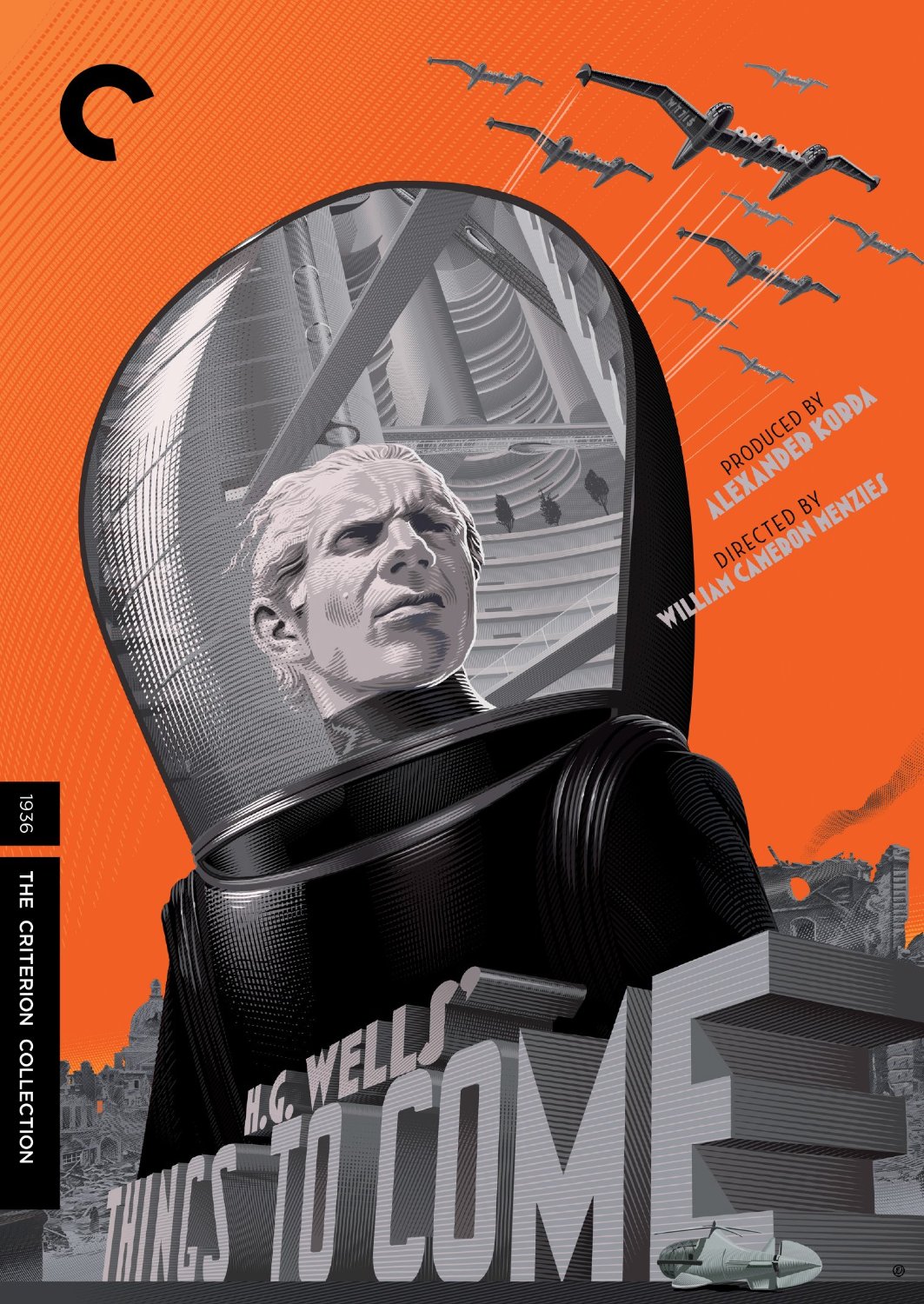
We see mass culture meditate on this through the 1930s as well. H. G. Wells' 1936 movie Things to Come features most of the themes we associate with the Postwar era already well-formed. A war breaks out in Europe, lasting far longer than anyone can imagine, and the power of the strategic bomber reduces humanity to a series of warlords engaging in petty squabbles with the few planes they're able to keep functioning by the 1960s. However, out of Basra, a technocratic world government in-embryo led by pilots forms, with intent to vanquish war forever and heal civilization.
This seems, to me at least, highly reminiscent of the Postwar moment. The film discusses how technology had advanced faster than reason or governance, would destroy society as we knew it, but out of the ashes a more enlightened people could rise. The apocalypse was clearly on everyone's mind at this point.
People were also highly aware that the powers of destruction had outstripped the powers of creation. You can look at Stanley Baldwin's famous saying that "the bomber will always get through" to see how powerful destructive forces had already become. Though this saying was somewhat exaggerated, people in the 1930s could see the trend of greater and greater destruction at longer and longer distances. The clear path we were on to cities being destroyed from continents away led Wendell Willkie to conclude in One World, his 1943 book about circumnavigating the world one year prior, that “There are no distant points... any longer" and that the concerns of remote regions of the globe will concern Americans "almost as much as the problems of the people of California concern the people of New York” in the future.
These are extraordinary claims. These were claims made before it became possible for a small nuclear-armed state to credibly threaten the US mainland. Yet, it was nevertheless clear to people that destruction from above could be brought from anywhere to anywhere and we would have to prepare for a global fight for our values.
So, before the bomb, people were grappling with human extinction. They feared that technology was advancing faster than our prudence in using it. Despite this, the proper harnessing by the right people, most likely a world government, would allow us to built a utopia like nothing ever before. The nuclear arms race merely confirmed those fears as well-founded rather than creating them. The biggest gap between the fears of these periods was speed — civilizational collapse in an hour is very different from collapse after decades of grueling attritional warfare — but the basic fear that science used wrong would get us all killed had been established in ordinary people and politicians by this point.
I don't believe the above story to be true. This justified collective anxiety about destruction seems to have started well before the bomb. Hiroshima and Nagasaki clearly contributed to it, but it seems to me to have accelerated a trend that was already present. There doesn't seem to be as sharp of a discontinuity on 8:15 a.m., August 6, as people naively assume. We can trace the development of the above anxiety very clearly using only pre-1945 sources.
Freud ends Civilization and its Discontents with a meditation on the topic of if technology will end us all. He postulates the "fateful question" of if we can hold back civilization's destructive instincts enough for the human race to survive. In this he takes for granted the idea that we would find "no difficulty in exterminating one another to the last man," something that it's not clear that technology in 1930 could do. Despite this, both he and his contemporaries could see the path things were going. We were going to get much better at killing ourselves, and unless we could match that progress with new social and political institutions it would spell disaster.
We see mass culture meditate on this through the 1930s as well. H. G. Wells' 1936 movie Things to Come features most of the themes we associate with the Postwar era already well-formed. A war breaks out in Europe, lasting far longer than anyone can imagine, and the power of the strategic bomber reduces humanity to a series of warlords engaging in petty squabbles with the few planes they're able to keep functioning by the 1960s. However, out of Basra, a technocratic world government in-embryo led by pilots forms, with intent to vanquish war forever and heal civilization.
This seems, to me at least, highly reminiscent of the Postwar moment. The film discusses how technology had advanced faster than reason or governance, would destroy society as we knew it, but out of the ashes a more enlightened people could rise. The apocalypse was clearly on everyone's mind at this point.
People were also highly aware that the powers of destruction had outstripped the powers of creation. You can look at Stanley Baldwin's famous saying that "the bomber will always get through" to see how powerful destructive forces had already become. Though this saying was somewhat exaggerated, people in the 1930s could see the trend of greater and greater destruction at longer and longer distances. The clear path we were on to cities being destroyed from continents away led Wendell Willkie to conclude in One World, his 1943 book about circumnavigating the world one year prior, that “There are no distant points... any longer" and that the concerns of remote regions of the globe will concern Americans "almost as much as the problems of the people of California concern the people of New York” in the future.
These are extraordinary claims. These were claims made before it became possible for a small nuclear-armed state to credibly threaten the US mainland. Yet, it was nevertheless clear to people that destruction from above could be brought from anywhere to anywhere and we would have to prepare for a global fight for our values.
So, before the bomb, people were grappling with human extinction. They feared that technology was advancing faster than our prudence in using it. Despite this, the proper harnessing by the right people, most likely a world government, would allow us to built a utopia like nothing ever before. The nuclear arms race merely confirmed those fears as well-founded rather than creating them. The biggest gap between the fears of these periods was speed — civilizational collapse in an hour is very different from collapse after decades of grueling attritional warfare — but the basic fear that science used wrong would get us all killed had been established in ordinary people and politicians by this point.
Last edited 2026/10/16(Fri) 18:16:27