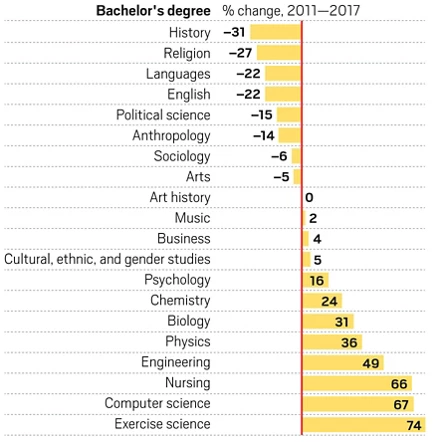
Perhaps i am being a bit extreme with the title but i see History dying a slow death due to Digitization and AI.
Paradoxically, i feel i am being both extreme and conservative with my thought process here. I am being conservative in the sense that i am trying to imagine the impact of AI and the changes caused by it, still within the present framework. While in all likelihood, a post AGI scenario might be dealing with whole different framework. But within the present societal framework, i might be making extreme claims in thinking of the total death of History as an academic discipline or at least largely obsolete beyond few specific cases.
As far as impact of AI goes, It is going to impact all disciplines and every fabric of society. The specific focus on history is not because its going to be uniquely impacted. But merely because i hold that interest in history as amateur historian.
Now every serious field develops barriers to entry simply because how the field is structured and because meaningful contributions demand a certain amount of preparation. How difficult these barriers make it to enter a specific field varies from discipline to discipline.
For history, the foundation of historical research has been access.
And that "access" has two dimensions. The first is physical access to the evidence. Manuscripts, archives, primary historical works, inscriptions, excavation reports, unpublished collections and even secondary sources which have all historically been scattered across libraries, monasteries, museums and private collections etc. The difficulty in obtaining these sources forms the primary barrier to the discipline of history. Many of them are difficult to obtain even for professional historians (speaking in terms of the past), let alone interested amateurs.
The second is linguistic access. Possessing a manuscript or any kind of source means little if it is written in Classical Chinese, Persian, Tibetan, Syriac or medieval Latin. Learning those languages becomes inseparable from becoming a historian.
Everything else rests upon that foundation. Historiography, source criticism, philology, textual criticism, paleography, chronology, contextual analysis and the scientific habits of weighing competing evidence are built upon access to sources etc. All those methods elevate history beyond storytelling into an academic discipline, but they presuppose the ability to engage with the sources in the first place.
For most of history (ignore the pun), that foundation has acted as the real gatekeeper for the discipline. The methodological scaffolding matters but relatively few people ever reached the point where they could even begin to apply it.
I do think that this understanding of history is old. Because there has already been an ongoing process of change. it has been a gradual change. And its the direction and the implication of where the change is heading that makes me think that history as an academic discipline will become meaningless (extreme case scenario but i see varying degree of discreditation happening to the field)
The primary harbinger of the change has been digitization. Digitization is steadily dissolving that physical barrier. Hundreds of thousands of archival documents, manuscripts, inscriptions etc are digitally available online. I presume they previously required expensive travel, institutional affiliation, months of correspondences and now they are all available online to huge sections of the general public. There is still a lot that isnt available and i think complete digitization remains decades away and even then some material will probably never become public. But the trend is unmistakable, most if not all source material will end up being digitized. Even if its not, even with the current numbers, the number of people with meaningful access to primary sources has increased by orders of magnitude.
The second dimension of access which is the linguistic barrier. Historically, analysis of Persian, Sanskrit, Classical Chinese or whatever language the text was in required years of dedicated study before a historian could even start asking substantive questions.
AI has pretty much changed that. Present AI capabilities are imperfect and they still make consequential mistakes (speaking as history enthusiast). But even with current capabilities, they already allow non-specialists to navigate texts that would otherwise have remained completely inaccessible. And as language models improve which they surely will, that linguistic barrier will be evaporated.
The result of these changes is that the two largest barriers that traditionally separated academic historians from everyone else are steadily shrinking (getting eviscerated if one is being dramatic).
Of course these changes have been happening for some time now. and its effects are already becoming visible (which is what drove this thought. i can see it in myself and the larger amateur historian community). But currently there still remains a difference between enthusiasts/amateur historians and professional historians. Its still easy to distinguish the amateurs from professional historians because the former remains unconvincing due to lack of disciplined source criticism, careful treatment of uncertainty and an awareness of existing historiography etc. I guess a subset of (more serious) amateur historians are capable identifying isolated mistakes made by professional historians but even they struggle to construct persuasive positive arguments of their own. I guess criticism is still easier. And the latter possess the methodological competence that elevates their work beyond just reading that of the primary source.
Nonetheless, i do feel that methodological competence is a much shallower moat than access itself. Learning how to evaluate competing sources, distinguish interpolation from original text, identify anachronism or construct an evidential argument is difficult, but those are teachable skills and do not require much in terms of intellect and talent. And they do not require privileged institutional access in the way archives once did.
Once the sources become widely available (the main hurdle), the remaining barrier is largely surmountable. And this is leaving aside how AI is obviously going to help in with dealing historical methodologies. Currently it is still at the level of criticizing, pointing our deficiencies in various works. But inevitably it is going to be able construct historical narratives using various historical methods at the professional level and beyond. (I have kind of become tired here so dont have the energy to think/write about how AI will eviscerate the domain of methodological competence as well)
I dont know if its appropriate comparison. But my current comparison is literacy, prized in certain senses in the ancient world because the access was limited but empty signifier in the modern world because everybody can become/is literate. Obviously not in a 1:1 scale. i dont think historical literacy will be as common as literacy. but it will be common.
Since the barrier to enter the discipline will keep eroding (which was even as it is not that difficult relative to other fields), what it takes to jump to the field of history as a non-historian will become even trivial. The size of the population that could enter the discipline will become exponentially larger. More of the general public/ the citizenry will participate in it, pursue it, and help progress our understanding of history and all that will erode the academic credentials (because they will no longer refer to a meaningful difference in competency and thus it will be far too easy to acquire those credentials). Which is to say, fundamentally you will get an inflation of historians and inflation will render it meaningless as an academic discipline. And history will have to live on outside the academia in some kind of pop-history/history-influencer/content creator dynamics.
Paradoxically, i feel i am being both extreme and conservative with my thought process here. I am being conservative in the sense that i am trying to imagine the impact of AI and the changes caused by it, still within the present framework. While in all likelihood, a post AGI scenario might be dealing with whole different framework. But within the present societal framework, i might be making extreme claims in thinking of the total death of History as an academic discipline or at least largely obsolete beyond few specific cases.
As far as impact of AI goes, It is going to impact all disciplines and every fabric of society. The specific focus on history is not because its going to be uniquely impacted. But merely because i hold that interest in history as amateur historian.
Now every serious field develops barriers to entry simply because how the field is structured and because meaningful contributions demand a certain amount of preparation. How difficult these barriers make it to enter a specific field varies from discipline to discipline.
For history, the foundation of historical research has been access.
And that "access" has two dimensions. The first is physical access to the evidence. Manuscripts, archives, primary historical works, inscriptions, excavation reports, unpublished collections and even secondary sources which have all historically been scattered across libraries, monasteries, museums and private collections etc. The difficulty in obtaining these sources forms the primary barrier to the discipline of history. Many of them are difficult to obtain even for professional historians (speaking in terms of the past), let alone interested amateurs.
The second is linguistic access. Possessing a manuscript or any kind of source means little if it is written in Classical Chinese, Persian, Tibetan, Syriac or medieval Latin. Learning those languages becomes inseparable from becoming a historian.
Everything else rests upon that foundation. Historiography, source criticism, philology, textual criticism, paleography, chronology, contextual analysis and the scientific habits of weighing competing evidence are built upon access to sources etc. All those methods elevate history beyond storytelling into an academic discipline, but they presuppose the ability to engage with the sources in the first place.
For most of history (ignore the pun), that foundation has acted as the real gatekeeper for the discipline. The methodological scaffolding matters but relatively few people ever reached the point where they could even begin to apply it.
I do think that this understanding of history is old. Because there has already been an ongoing process of change. it has been a gradual change. And its the direction and the implication of where the change is heading that makes me think that history as an academic discipline will become meaningless (extreme case scenario but i see varying degree of discreditation happening to the field)
The primary harbinger of the change has been digitization. Digitization is steadily dissolving that physical barrier. Hundreds of thousands of archival documents, manuscripts, inscriptions etc are digitally available online. I presume they previously required expensive travel, institutional affiliation, months of correspondences and now they are all available online to huge sections of the general public. There is still a lot that isnt available and i think complete digitization remains decades away and even then some material will probably never become public. But the trend is unmistakable, most if not all source material will end up being digitized. Even if its not, even with the current numbers, the number of people with meaningful access to primary sources has increased by orders of magnitude.
The second dimension of access which is the linguistic barrier. Historically, analysis of Persian, Sanskrit, Classical Chinese or whatever language the text was in required years of dedicated study before a historian could even start asking substantive questions.
AI has pretty much changed that. Present AI capabilities are imperfect and they still make consequential mistakes (speaking as history enthusiast). But even with current capabilities, they already allow non-specialists to navigate texts that would otherwise have remained completely inaccessible. And as language models improve which they surely will, that linguistic barrier will be evaporated.
The result of these changes is that the two largest barriers that traditionally separated academic historians from everyone else are steadily shrinking (getting eviscerated if one is being dramatic).
Of course these changes have been happening for some time now. and its effects are already becoming visible (which is what drove this thought. i can see it in myself and the larger amateur historian community). But currently there still remains a difference between enthusiasts/amateur historians and professional historians. Its still easy to distinguish the amateurs from professional historians because the former remains unconvincing due to lack of disciplined source criticism, careful treatment of uncertainty and an awareness of existing historiography etc. I guess a subset of (more serious) amateur historians are capable identifying isolated mistakes made by professional historians but even they struggle to construct persuasive positive arguments of their own. I guess criticism is still easier. And the latter possess the methodological competence that elevates their work beyond just reading that of the primary source.
Nonetheless, i do feel that methodological competence is a much shallower moat than access itself. Learning how to evaluate competing sources, distinguish interpolation from original text, identify anachronism or construct an evidential argument is difficult, but those are teachable skills and do not require much in terms of intellect and talent. And they do not require privileged institutional access in the way archives once did.
Once the sources become widely available (the main hurdle), the remaining barrier is largely surmountable. And this is leaving aside how AI is obviously going to help in with dealing historical methodologies. Currently it is still at the level of criticizing, pointing our deficiencies in various works. But inevitably it is going to be able construct historical narratives using various historical methods at the professional level and beyond. (I have kind of become tired here so dont have the energy to think/write about how AI will eviscerate the domain of methodological competence as well)
I dont know if its appropriate comparison. But my current comparison is literacy, prized in certain senses in the ancient world because the access was limited but empty signifier in the modern world because everybody can become/is literate. Obviously not in a 1:1 scale. i dont think historical literacy will be as common as literacy. but it will be common.
Since the barrier to enter the discipline will keep eroding (which was even as it is not that difficult relative to other fields), what it takes to jump to the field of history as a non-historian will become even trivial. The size of the population that could enter the discipline will become exponentially larger. More of the general public/ the citizenry will participate in it, pursue it, and help progress our understanding of history and all that will erode the academic credentials (because they will no longer refer to a meaningful difference in competency and thus it will be far too easy to acquire those credentials). Which is to say, fundamentally you will get an inflation of historians and inflation will render it meaningless as an academic discipline. And history will have to live on outside the academia in some kind of pop-history/history-influencer/content creator dynamics.